Log-hub Lets Supply Chain Teams Stress-Test Inventory Policies Against Uncertain Demand 

Log-hub Lets Supply Chain Teams Stress-Test Inventory Policies Against Uncertain Demand 

Nachrichten

Log-hub Lets Supply Chain Teams Stress-Test Inventory Policies Against Uncertain Demand 

October 2026 | Log-hub 6.4 Release

Log-hub advances its Inventory Simulation App with a stochastic mode, enabling supply chain teams to test inventory policies against multiple demand scenarios and set inventory targets backed by evidence.

Die new stochastic mode stress-tests inventory policies against demand that varies the way it does in real life. Based on each SKU’s average demand and variability, the app simulates many possible demand patterns and tests each selected replenishment policy across them, helping teams reduce the risk behind their inventory decisions before they are put into practice. 

Alexander Sigmund

Jan Sigmund, CEO of Log-hub, commented:

For years, the conversation around inventory has centered on getting the forecast right. We think the more useful question is how well a policy holds up when the forecast turns out wrong, because sooner or later it will. Our goal at Log-hub is to make that question easy to answer for every planner who sets a reorder point.

Results show inventory levels, service levels, lost sales, and costs for each policy side by side. Whether a portfolio includes stable fast movers, volatile items, or products with irregular demand, planners can identify SKUs at risk of stockouts or excess inventory before problems arise and answer what-if questions, such as the effect of a longer supplier lead time, in the same simulation. 

Inventory targets touch supply chain, sales, and finance at once, and each team brings its own view of how much stock is enough. With the stochastic mode, these teams can work from the same simulated results and agree on a target backed by evidence. It also gives management a clear way to show the board that working capital is managed with a structured, risk-based approach. 

🔔 Don’t miss a thing

Get product updates, release highlights, and supply chain insights delivered to your inbox.

Subscribe now

Supply chain teams can test the stochastic mode with their own data through Log-hub’s Freemium plan, and for existing users, updates like this come every two months at no additional cost. 

Catch up with our latest news
Log-hub’s Supply Chain Apps Brings Regional Network Visibility and Risk-Based Inventory Planning

Log-hub’s Supply Chain Apps Brings Regional Network Visibility and Risk-Based Inventory Planning

Nachrichten

Log-hub’s Supply Chain Apps Brings Regional Network Visibility and Risk-Based Inventory Planning

September 2026 | Log-hub 6.4 Release

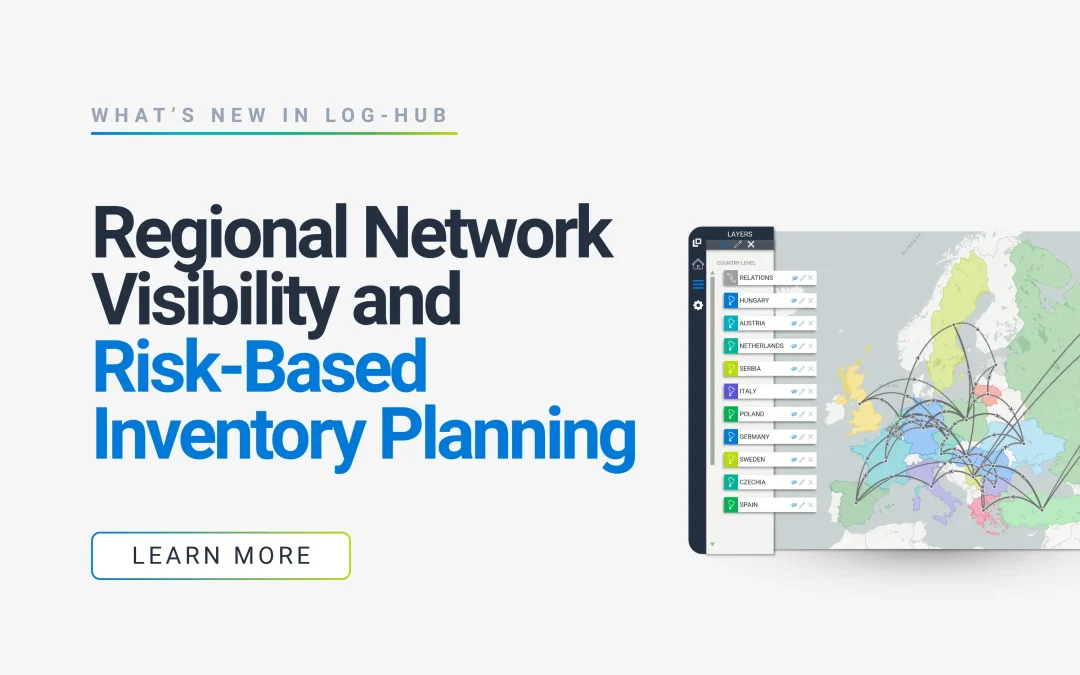
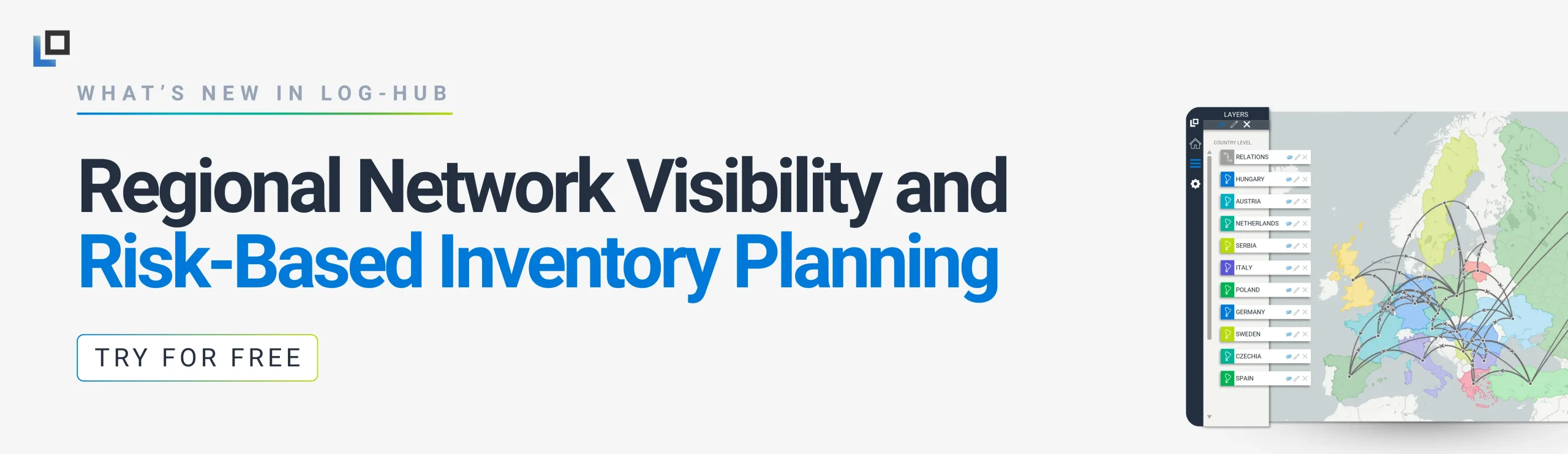
Log-hub has introduced custom map hierarchies und stochastic mode in the Inventory Simulation App, as part of its Log-hub 6.4 release. This update enables supply chain teams to visualize their networks according to their own geographic structures and evaluate inventory policies against multiple demand scenarios, helping them make more informed, data-driven decisions. 

Supply chains are often managed by regions or different geographical entities, yet network maps rarely show them in a way they actually work. Inventory planning has a similar problem, as demand changes from day to day, while inventory policies are often set against a single fixed forecast. In both cases, supply chain teams end up rebuilding the analysis in spreadsheets before it is ready for a management decision, and Log-hub 6.4 is designed to remove that step. 

With new custom map hierarchies, organizations can define their own regions and see their network in that same structure, from individual locations up to country-to-country, region-to-region or even continent-to-continent flows. The resulting overview transforms thousands of shipment connections into a clear picture of the network, ready for management reviews or board presentations. It highlights key transport corridors, regional dependenciesund opportunities to consolidate lanes or eliminate unnecessary movements between regions. 

🔔 Don’t miss a thing

Get product updates, release highlights, and supply chain insights delivered to your inbox.

Subscribe now

The new stochastic method in the Inventory Simulation App helps companies make more informed inventory decisions by simulating multiple demand scenarios and evaluating different replenishment policies across every SKU and period. By quantifying the impact on service levels, lost sales, and costs, the app enables supply chain teams to identify risks, assess trade-offsund establish data-backed inventory targets. This enables teams to identify SKUs at risk of stockouts or excess inventory before problems arise, while providing executives with clear policy options and their associated trade-offs to support a structured, risk-based approach to working capital management. 

Alexander Sigmund

Alexander Sigmund, CTO of Log-hub, comments:

Supply chain leaders are accountable on cost, service, and working capital, und Log-hub 6.4 is built to improve all three. Our customers can now see where their network is losing money and back their inventory targets with evidence, early enough to act before it shows up in the numbers.

Other updates in Log-hub 6.4 cut the manual work between data and decision in the same way. In the Milkrun und Transport Optimization apps, multiple orders delivered to the same location now count as one stop, so teams no longer need to merge orders or adjust stop limits as a workaround. 

Die Supply Chain Apps Agent can now create interactive charts directly from app output tables und analyse datasets of more than 100,000 rows by working on the underlying data. 

Log-hub 6.4 brings supply chain analysis closer to how organizations are structured and how demand behaves in practice. Updates like this arrive every two months, and teams already using Log-hub’s Supply Chain Apps receive every new feature at no additional cost, so the tools they work with keep getting better with each release.  

Test it yourself by getting our Fremium plan. 

Catch up with our latest news

Log-hub CEO Jan Sigmund Discusses AI and the Democratization of Supply Chain Analytics on Supply Chain Connect Podcast 

Log-hub CEO Jan Sigmund Discusses AI and the Democratization of Supply Chain Analytics on Supply Chain Connect Podcast 

Nachrichten

Log-hub CEO Jan Sigmund Discusses AI and the Democratization of Supply Chain Analytics on Supply Chain Connect Podcast 

September 2026 | AI in Supply Chain

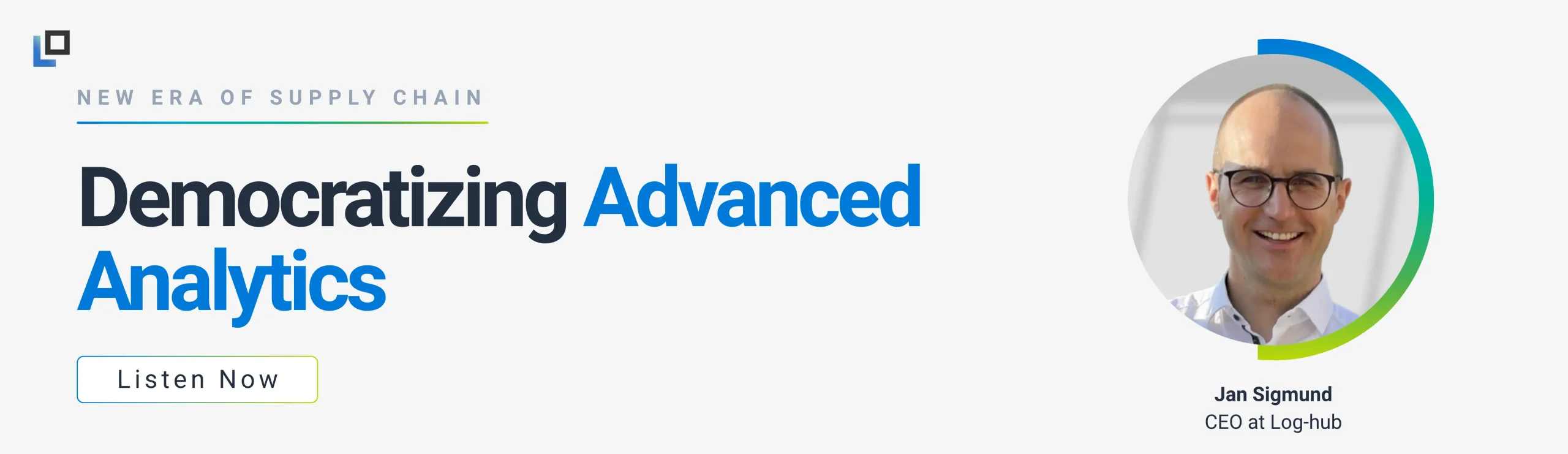
Log-hub CEO Jan Sigmund joined host Tyler Fussner on the Supply Chain Connect podcast for a wide-ranging conversation about how AI is reshaping supply chain analytics.

The conversation centres on what supply chain work looks like now that AI capability has caught up with expectations. Advanced analytics tools were historically built by experts for experts, licenses were expensive, and projects like network design could take months and were rarely handled in house. That access is changing as AI makes the tools themselves easier to use, shifting the underlying work from learning specialized software to describing a problem precisely. 

Sigmund connected this shift to Log-hub’s own approach of meeting planners where they already work, from Supply Chain Apps built as an Excel add-in to the company’s integration with Claude and ChatGPT. 

Sigmund also drew a parallel to software development. In the space of about 18 months writing code moved from being the core of a developer’s job to being the exception, though developers themselves didn’t disappear. The job shifted from writing code to directing it. He expects a similar shift in supply chain, where the job moves from producing analysis to asking the right questions. 

Alexander Sigmund

“Democratizing is not dumping down, it’s a better packaging of the solutions. When analysis gets cheaper, people ask more questions.”  

Sigmund argued the biggest value today sits in the interface and the data work around it: language models are strong at understanding a question, cleaning up messy data and explaining results in plain language, while the optimization itself should still run on proven solvers. AI should propose and explain, and a person should decide, keeping a human in the loop, the way a car’s navigation system suggests a route while the driver still holds the wheel. 

🔔 Don’t miss a thing

Get product updates, release highlights, and supply chain insights delivered to your inbox.

Subscribe now

The full conversation goes further into where Sigmund draws the line between AI and human judgment. Listen to the full episode, “Democratizing Advanced Analytics: The New Era of Supply Chain Planning,” on Supply Chain Connect. 

Catch up with our latest news

Manfred Schellhammer Inducted into the Swiss Supply Chain Hall of Fame

Manfred Schellhammer Inducted into the Swiss Supply Chain Hall of Fame

Nachrichten

Manfred Schellhammer Inducted into the Swiss Supply Chain Hall of Fame

September 2026 | Board Member 

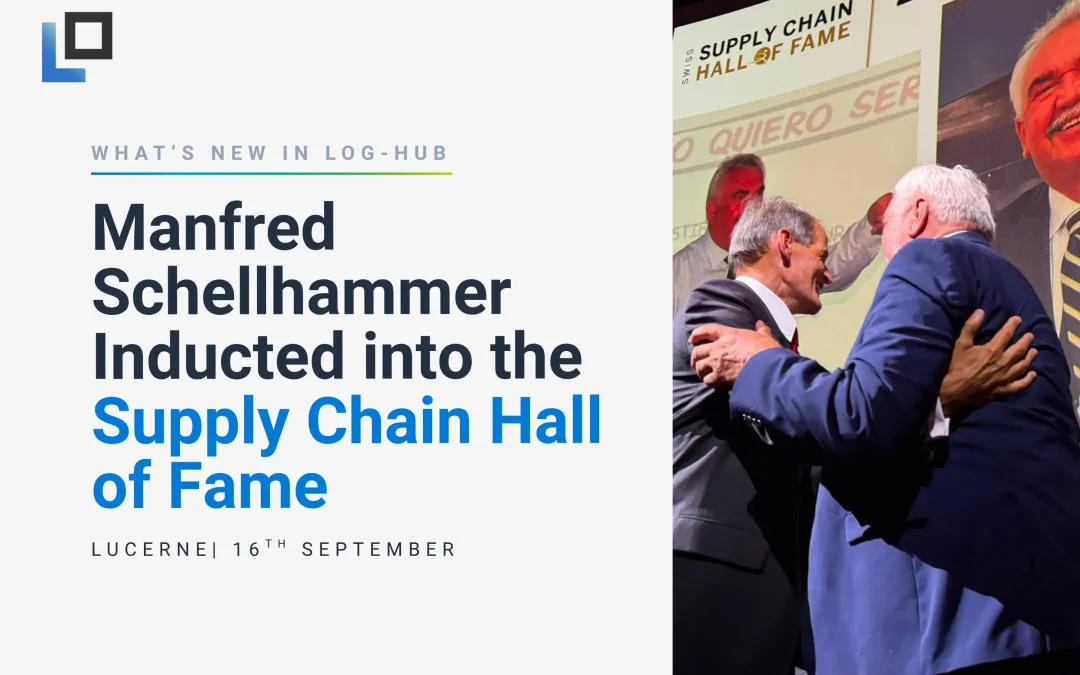
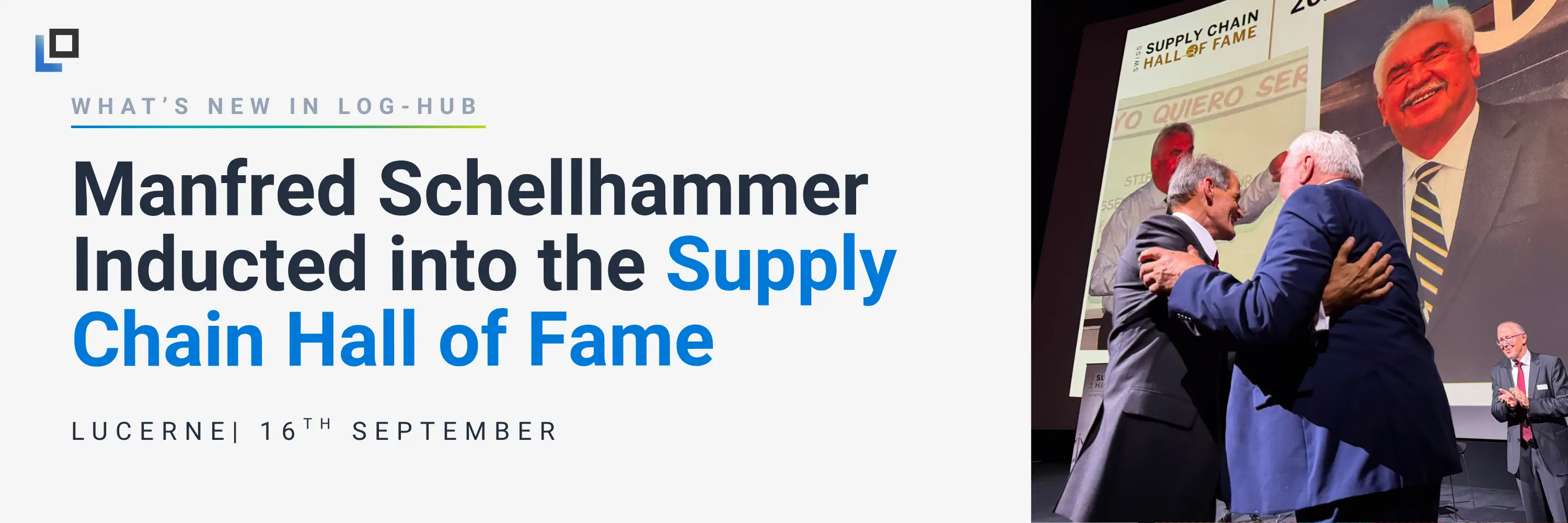
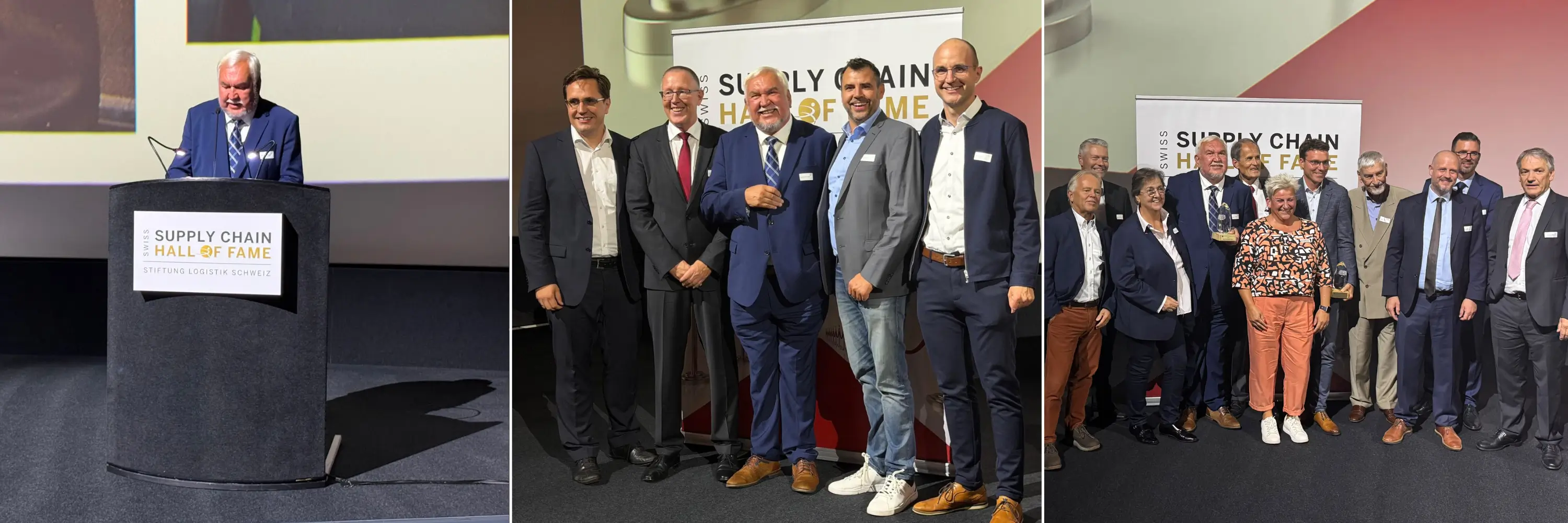
Manfred Schellhammer, a member of Log-hub AG’s Board of Directors, was inducted into the Swiss Supply Chain Hall of Fame on September 16, 2026, at the organization’s eleventh annual benefit gala at the Verkehrshaus in Lucerne, in recognition of six decades of leadership in Swiss logistics.

Manfred Schellhammer has served on Log-hub’s Board of Directors and as Chairman of its Personnel Committee for the past ten years, and brings decades of leadership experience in Swiss logistics, including more than two decades as Managing Director of Kuehne + Nagel Switzerland. 

This recognition places Schellhammer among the honourees of the Swiss Supply Chain Hall of Fame, one of the most prestigious honours in Swiss logistics. Organized by the Stiftung Logistik Schweiz (Logistics Foundation Switzerland), it has recognized pioneering figures in Swiss logistics, supply chain and transport every year since 2015. 

Dirk Reich, Chairman of Log-hub AG, had the honour of delivering Schellhammer’s induction speech at the gala. 

“For him, logistics is not a profession, it is a calling that he has fulfilled his entire life and still does today,” Reich said. “… He takes great pleasure in inspiring young technicians, software developers and architects, young people, to become enthusiastic about logistics and supply chains.” 

For everyone at Log-hub, seeing a member of the company’s Board of Directors recognized among Switzerland’s most accomplished logistics pioneers is a moment worth celebrating. It reflects the calibre of experience guiding Log-hub, and the same curiosity, expertise and care for people that make Manfred such a valued part of the team.

Catch up with our latest news

Customer Saves Millions on US Tariffs With an Automated Compliance Engine

Customer Saves Millions on US Tariffs With an Automated Compliance Engine

Nachrichten

Customer Saves Millions on US Tariffs With an Automated Compliance Engine

September 2026 | Cost Saving Initiative

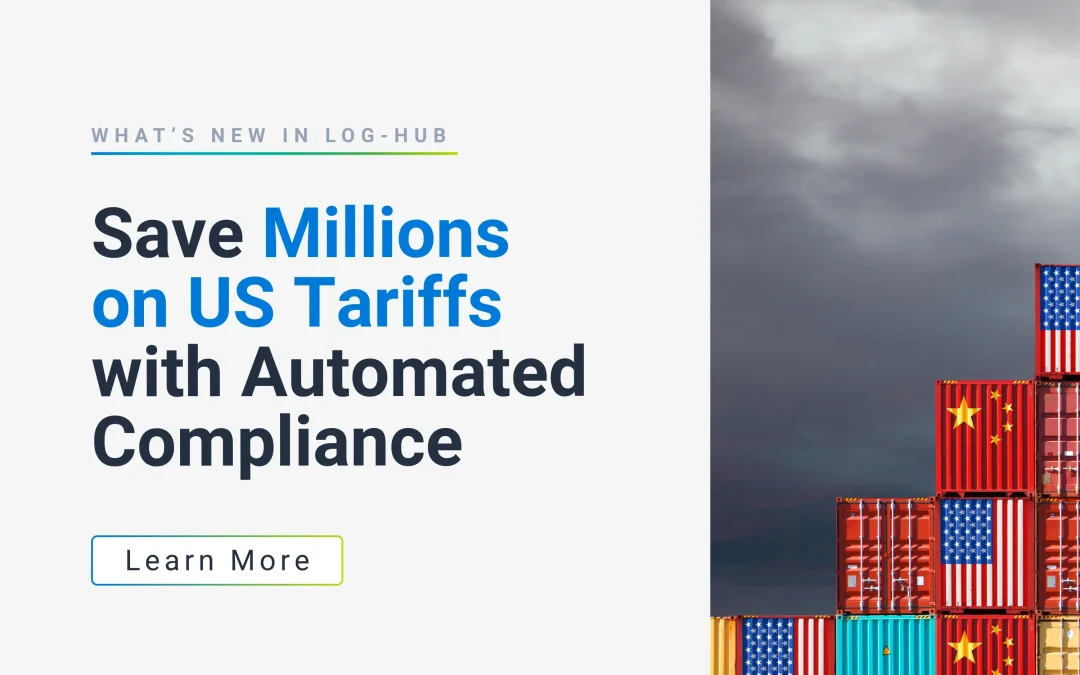
Log-hub’s cost-saving initiative for logistics service providers and manufacturers helped a manufacturing customer avoid import blocks and save millions in unnecessary tariff costs by automating US tariff compliance, a result Log-hub presented in an online session on September 4, 2026.

Since Q4 2025, US tariff rules have changed on a near-monthly basis, and manufacturers have struggled to keep classifications, origin data, and shipments compliant. Felix Mutter, Senior Data Engineer at Log-hub, and Sandro Brändle, Chief Data and Analytics Officer, walked through how the customer replaced manual tariff checks with a dynamic, automated solution built around a Bill of Materials extended with substance and transport data.  

The approach helped the customer avoid import blocks, reduce compliance risk, and save millions in unnecessary tariff costs, cutting tariff-related effort per reporting cycle by 90 percent, from about sixteen hours to two. The underlying data refreshes automatically within 24 hours, and the team built the first version of the solution within 15 working days. The full session, “Beat US Tariff Changes: Building a Tariff Evaluation Engine” is available on Log-hub’s YouTube channel. 

Alexander Sigmund

Sandro Braendle, Chief Data & Analytics Officer summed up:

The tariff project also turned up something we did not plan for: real gaps in the customer’s own master data. Fixing those pays off well beyond tariffs. The same Bill of Materials model is what will carry the next regulation too, whether that is REACH, CBAM, or whatever comes after tariffs.

The tariff project is one of 25 proven cost-saving use cases in Log-hub’s Cost Savings Programme for manufacturers, spanning demand, supply, inventory, production, logistics, and integrated planning, with the savings guaranteed under the programme. The tariff session was the first of these results to go live as a Use Case Webinar, with the rest already lined up to air in the coming months.

🔔 Don’t miss a thing

Get product updates, release highlights, and supply chain insights delivered to your inbox.

Subscribe now

Manufacturers dealing with similar tariff exposure can reach out to Log-hub to see whether the same approach applies to their own data. 

Catch up with our latest news

Supply Chain Analytics Pulse Goes Live for a Webinar on Responsible AI

Supply Chain Analytics Pulse Goes Live for a Webinar on Responsible AI

Nachrichten

Supply Chain Analytics Pulse Goes Live for a Webinar on Responsible AI

September 2026 | Supply Chain Analytics Pulse

Supply Chain Analytics Pulse will host a live webinar on responsible AI in supply chain and logistics. The session will take place on September 16, 2026, led by AI expert Michael Alf to address the oversight gaps and accountability blind spots shaping AI adoption in the industry.

AI adoption in supply chain and logistics is picking up pace, with tools now automating decisions, flagging anomalies, optimizing routes, and predicting demand. Governance and oversight often struggle to keep pace. Organizations getting the most value from these tools tend to share a clear view of what their AI systems are doing, defined accountability for when something goes wrong, and processes to catch problems before they reach customers or regulators. 

Over one hour, AI expert Michael Alf will cover the AI risks most often overlooked in logistics contexts, the accountability gaps behind the most common failure points, and a governance approach that teams without a dedicated AI function can put into practice, along with ways to use AI more confidently in daily operations. The session is designed to be practical and directly applicable the following day.

🔎​ Just exploring? Get FREE Supply Chain Analytics Pulse insights in your inbox.

Subscribe to Supply Chain Analytics Pulse for bi-weekly announcements of the latest supply chain research, trends, and best practices.

Die Supply Chain Analytics Pulse is a biweekly written publication that gives supply chain and logistics professionals deep dive analysis on the issues shaping day-to-day decisions, recently covering topics such as carrier selection risk und safety stock behaviour after tariff volatility. Once each quarter, Log-hub opens a live session in its place, inviting AI expert Michael Alf to lead a deeper conversation with its Pulse audience. Questions and themes raised during the webinar carry into future written editions, extending the discussion further into AI applications for supply chain and logistics professionals.  

Ritik Luthra

Ritik Luthra, CTO of Log-hub, comments:

AI is already part of daily decision making across supply chain and logistics. The organizations that get real value from it are the ones that also know how to govern it. That is exactly the kind of applied insight we want our Pulse audience to walk away with.

Save your seat for the September 16, at 2PM CEST webinar at registration link and bring your questions for Michael Alf. 

Catch up with our latest news

Recieve the Literature by e-mail!

Recieve the Literature by e-mail!

Share with us your e-mail address in order to receive the resource.

You have Successfully Subscribed!