
In 1844, a single electric wire transformed industry. When the telegraph first pulsed across the continent, distance and latency effectively disappeared for the railways. For the first time, threats and opportunities were visible before they arrived. Rail operations shifted from reactive firefighting to synchronized, risk-managed control.
Today’s supply chains are at a comparable inflection point. But the constraint is no longer access to data, it is decision velocity. Visibility without action creates dashboards. Visibility with autonomy creates control.
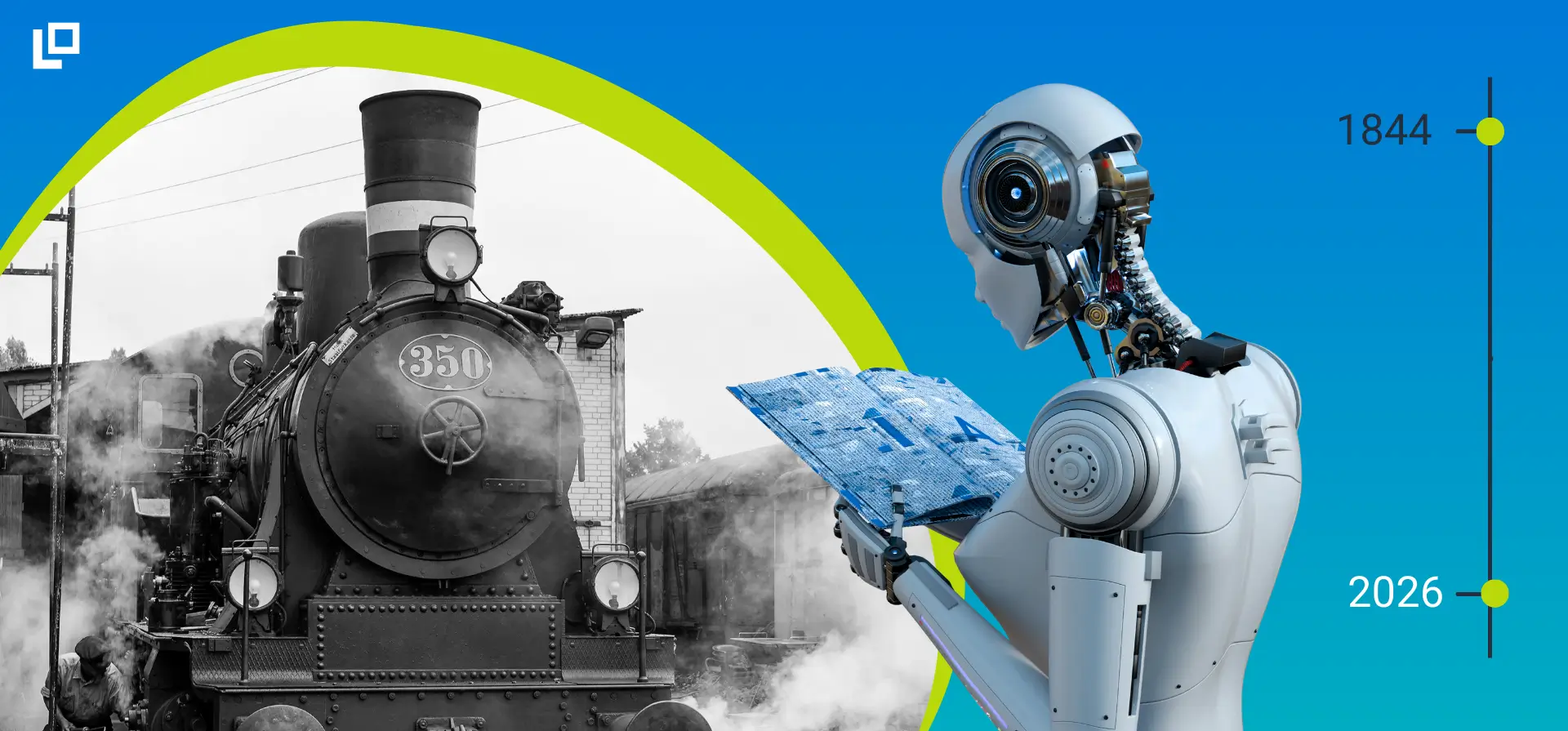
Agentic AI Towers represent this next step: operational control systems where autonomous AI agents continuously sense, decide, and act across logistics workflows. Information no longer queues for human review. Decision cycles compress from hours or days to minutes.
Agentic AI Towers are advanced operational control platforms that integrate autonomous artificial intelligence agents directly into the heart of supply chain workflows.
In case you want to jump ahead
How Agentic AI Towers Work
These systems continuously ingest data from across an organization’s logistics, inventory, transportation, and vendor networks, providing end-to-end real-time visibility and orchestrating decisions far faster than traditional methods. Functioning as a network of specialized agents, each responsible for monitoring, decision-making, and execution, Agentic AI Towers dynamically allocate resources, optimize routes, and preempt disruptions with minimal human intervention.
For effective implementation, leaders should start by integrating clean, high-quality data from core systems, define clear operational KPIs, and deploy AI agents in targeted pilot domains where quick, measurable returns can be achieved before scaling across the enterprise.
Concrete Performance Gains (Industry Benchmarks)
The table below summarizes industry benchmarks comparing traditional, human-centric planning models with environments where Agentic AI is embedded into daily operations. The metrics focus on decision speed, resource efficiency, and recovery performance.
| Function | Current State | AI Enabled Impact | Source |
|---|---|---|---|
| Transportation Coordination | On-time arrivals 80–85%; manual rescheduling | Up to 20% transport cost reduction; 15% faster arrivals | McKinsey, 2026 |
| Inventory | Inventory accuracy 80–85%; excess stock ~30% | 95% accuracy; 30% less overstock | Logistics AI Impact Report, 2025 |
| Exception & Disruption Handling | 60%+ of planner time spent manually | 20–40% fewer manual exceptions; recovery 10–25% faster | Gartner; McKinsey, 2025–2026 |
| Routine Communication | Avg. handling time ~7 min/inquiry | Up to 80% automated; ~2 min avg.; ~60% labor reduction | Internal Benchmarks, 2025 |
These results illustrate a consistent pattern: visibility creates awareness, but autonomous execution creates outcomes.
Proof at Scale: How Leading Organizations Apply It
The examples below show how large, complex organizations translate visibility into operational advantage by embedding AI-driven decisioning into core workflows, not as pilots, but as production systems.

Delivery/Inventory
15% savings in fuel & 35% downtime reduction
80% improvement in delivery reliability
Routing/Fleet
12% reduction in total transport spend
20% faster average delivery times

Customer/Fulfillment
20% reduction in fulfillment cost per order
50% picking efficiency increase
How to Act on This: Choose your Perspective
Whether you lead the organization or build the systems behind it, this is a visibility problem with two very different responsibilities. The sections below are intentionally split so each role can focus on what matters most, without friction or unnecessary escalation.
Click on the perspective you want to analyze – executives or analysts.
Key Implementation Steps (Executive View)

1. Assessment & Pilot Selection
Identify high-frequency, high-variability decision processes with measurable financial impact and reliable data availability. Start where operational pain intersects with data maturity.
Make sure:
✔ Bottlenecks are identified
✔ Relevant data for analysis is available
Expected impact: 5-15% logistics cost reduction and 20-50% forecast accuracy improvement.

2. Objective & KPI Alignment
Establish pre-deployment baselines tied directly to P&L and service levels. Measure cost-to-serve reduction, working capital release, and service-level uplift.
✔ Order Cycle Time
✔ OTIF
✔ Inventory Turns
✔ Expedite Costs
Leading companies measure AI impact through cost-to-serve reduction, working capital release, and service-level uplift, not technical metrics.

3. Data Integration
Unify ERP, WMS, TMS, demand planning, supplier portals, and IoT feeds into a near-real-time decision layer.
Agentic AI depends on structured and streaming data across:
✔ Transport Capacity
✔ Supplier Performance
✔ Customer Demand Signals
✔ Disruption Alerts
According to Deloitte’s supply chain digital maturity research, organizations with integrated data platforms are 2x more likely to scale AI successfully beyond pilot stage.

4. Persona-Based Agent Architecture
Deploy distinct agents aligned to operational roles, such as:
✔ Demand Planning Agent
✔ Inventory Allocation Agent
✔ Transport Optimization Agent
✔ Risk Monitoring Agent
Each agent must have: defined decision authority, financial guardrails, escalation thresholds, and audit logging.
This mirrors proven “control tower” architectures used by large retailers and manufacturers.

5. Iterative Human-in-the-Loop Deployment
Begin within a single domain (e.g., domestic transportation or one product category).
Run agents in shadow mode first:
✔ Compare agent recommendations vs. human planner decisions
✔ Quantify variance and outcome improvement
✔ Gradually shift from advisory to semi-autonomous execution
MIT Center for Transportation & Logistics research shows that hybrid human-AI decision models outperform either alone in complex supply chain environments.

6. Exception Management by Design
Agentic systems must be built around structured escalation:
✔ Capacity shortfalls
✔ Service-level breach risk
✔ Supplier disruption alerts
✔ Cyber or compliance anomalies
High-performing organizations design AI to handle routine variability autonomously, while escalating high-risk anomalies with full traceability. This reduces planner workload while preserving executive oversight and governance.
Key Implementation Steps (Analyst View)

1. Process Mapping and Prioritization
Conduct a structured review of end-to-end event workflows to identify recurring bottlenecks, manual interventions, and operational pain points. Focus on areas where disruption frequency and data reliability justify intervention.
✔ Bottlenecks Identified
✔ Manual Decision Point
✔ High operational impact
A study shows that a 20% enhancement in operational efficiency can raise profits by up to 30%.

2. KPI Definition & Baseline Capture
Define a limited set of decision-relevant KPIs tied to operational response and escalation behavior. Establish a clear baseline before automation.
✔ Response Time Measured
✔ Inventory Accuracy Captured
✔ Escalation Rates Tracked
Organizations implementing clearly defined KPIs and baseline measurement, combined with interactive dashboards, have been shown to respond up to 36 % faster to market or operational changes, according to industry research.

3. System & Data Integrations
Integrate operational systems into a centralized environment with standardized, real-time data availability.
✔ Event Data Connected
✔ Vendor Platform Integrated
✔ Sensor Feeds Aligned
Case analyses show that adopting standardized data integration protocols can lead to ~48 % improvement in data exchange efficiency and a ~39 % reduction in integration‑related errors.

4. Agent Configuration & Testing
Configure and test agents for narrow tasks to reduce manual checks and erroneous alerts.
✔ Agent Scope Defined
✔ Thresholds Set
✔ Automated workflows cut labour hours up to 70% in some supply chain metrics
A comparative research study on LLM‑based vulnerability filtering agents showed that properly configured agent architectures can reduce false positives dramatically, from over 92 % to as low as 6.3 % in optimal configurations.

5. Incremental Rollout & Monitoring
Roll out in controlled phases to verify agent contributions against baseline performance.
✔ Controlled Deployment
✔ Parallel Monitoring
Automation reduces cycle and reconciliation times significantly (~75% faster processing in some metrics).
Studies of DevOps and monitoring practices report: 40 % reduction in Mean Time to Recovery (MTTR) for teams using automated monitoring and rollback strategies.

6. Exception Logging & Feedback Loops
Log exceptions and overrides to refine automation continuously.
✔ Exceptions Recorder
✔ Overrides Analyzed
✔ Up to 30% Operational Costs Savings
Organizations using systematic exception tracking and feedback report: 25–40 % reduction in system downtime ~30 % faster incident resolution.
Conclusion
In 1844, the telegraph made the world smaller. In 2026, Agentic AI makes it decisive.
Organizations that move beyond visibility dashboards toward autonomous control models shift from reacting to disruptions to actively orchestrating outcomes. Research from Gartner, McKinsey, and IBM consistently shows double-digit improvements in cost efficiency, service reliability, and resilience once AI agents operate inside daily decision loops.
As autonomous decision systems become standard across best-run supply chains, durable advantage will belong to leaders who deploy them early, govern them rigorously, and align them with clear strategic intent, not just better visibility.
STILL CURIOUS?
More resources are waiting for you in our Resource Library.
WANT TO TALK TO US?
Great! Our experts would be thrilled to talk to you.
NEED SUPPORT?
Contact us via email and get your answers within 24 hours.

Recent Comments