Why Automation Will Peak in Mega-Sites and Stop Short Everywhere Else

Why Automation Will Peak in Mega-Sites and Stop Short Everywhere Else

Industry

Why Automation Will Peak in Mega-Sites and Stop Short Everywhere Else

August 2026 | Supply Chain Myths

Automation in the supply chain is often discussed as a destination: lights-out warehouses, autonomous flows, humans removed from the loop.

In reality, automation behaves more like a migration. It moves aggressively into a few places — and quietly stalls everywhere else. Not because the technology fails. But because variability beats machines far more often than vendors admit.

It’s a pattern we flagged in our roundup of 11 supply chain myths leaders need to unlearn in 2026 — here’s the full picture behind it.

01 Where Supply Chain Automation Works Best

Some environments are almost unfairly well-suited for automation. They share a few characteristics: high volumes, standardized flows, predictable demand, repetitive tasks, and a stable SKU mix. Processes don’t change often. Exceptions are rare and well-defined.

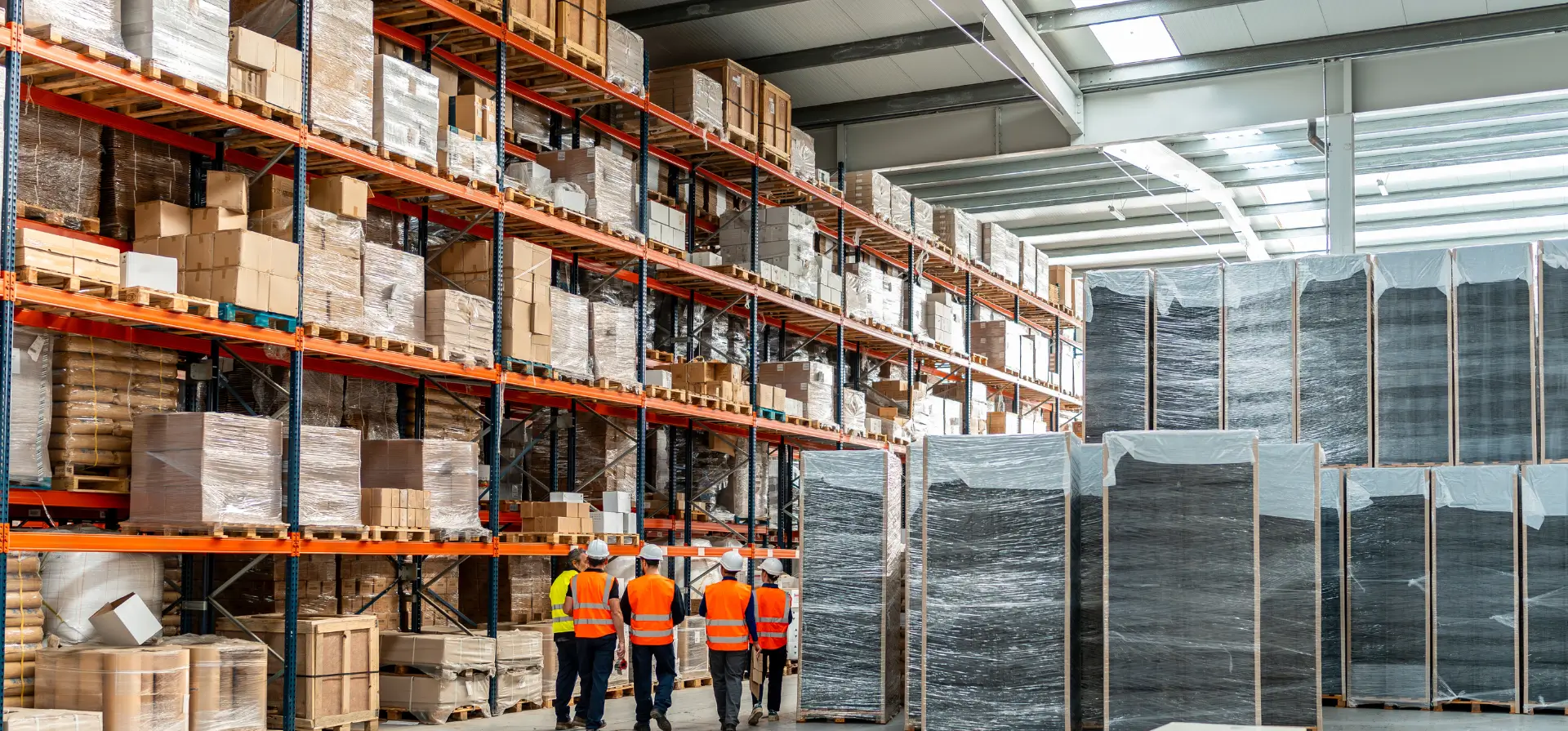
Think of mega distribution centers, e-commerce fulfillment hubs, parcel networks, or high-throughput cross-docks. These are environments where the same items move through the same paths, day after day.

Robots thrive here because they are built for rules and repetition. Amazon alone has passed a million deployed robots across its fulfillment network, and today robots touch roughly three-quarters of everything it ships. When the flow is stable, automation scales beautifully — and the ROI is obvious.

02 Why Automation Investment Concentrates in Mega-Sites

In these “perfect” nodes, automation has three advantages that are hard to replicate elsewhere.

First, utilization stays high. Machines are busy most of the time, which justifies the capital investment.

Second, the process landscape is stable. Layouts don’t change weekly, SKU profiles are predictable, and exceptions are limited.

Third, performance gains are easy to measure: more throughput, lower unit cost, faster processing.

This combination makes automation both operationally viable and financially defendable — and it’s why Gartner expects half of all new warehouses built in developed markets by 2030 to be designed with humans as optional, not essential. That’s the mega-site model, scaling into the future.

📧 Get supply chain insights in your inbox

Product updates, new blog posts, upcoming training sessions, and other supply chain insights from Log-hub — sent straight to your inbox.

Subscribe 🔔

03 The Messy Middle: Where Warehouse Automation Struggles

Outside of those ideal nodes lies most of the supply chain. Regional distribution centers. Multi-client 3PL warehouses. Industrial spare-parts networks. Operations handling pallets, cases, and eaches — all in the same shift.

These environments are defined by change. SKU mixes evolve constantly. Orders are unpredictable. Customers have special rules. Processes are overridden daily to “just make it work.”

This is not a failure of execution. It’s the nature of real supply chains. And it is deeply hostile to full automation.

The scale of this middle is easy to underestimate: even with automation investment accelerating everywhere, four out of five warehouses today still run without it.

04 Why Exceptions Break the Automation ROI Model

Robots are excellent at following defined paths, repeating known actions, and handling known item types. They struggle the moment reality deviates: damaged goods, wrong labels, mixed pallets, last-minute priority changes, new SKUs with missing data, or the countless human workarounds that keep operations running.

Every exception triggers intervention. Someone has to step in, reset the process, redesign logic, or manually move inventory. Each exception adds cost, delay, and fragility.

The more exceptions an operation has, the faster automation ROI erodes. That’s why, in practice, exceptions eat robots for breakfast.

Where Automation Actually Pays Off in Your Network

Knowing it concentrates in mega-sites is one thing — knowing where it pays off in your network is another. We’ve mapped 25 proven cost savings and operational boosts for manufacturers that answer exactly that.

05 Why Full Automation Won’t Scale Across the Supply Chain Network

There are structural reasons companies stop short. When volumes fluctuate, robots sit idle. When variability is high, engineering effort explodes. And in multi-client 3PL environments, standardization simply isn’t realistic — what works for one client breaks another.

Labor pressure explains why interest is everywhere: turnover runs near 36%, and most leaders expect to adopt robotics within five years. But interest isn’t fit. The gap between that intent and the reality on the ground looks like this:

Mega-Site vs. Messy Middle, at a Glance

Mega-Site / Fulfillment HubMessy Middle (Regional DC, Multi-Client 3PL)
SKU mixStable, high-volumeConstantly shifting
Demand patternPredictableVolatile, client-driven
Exception rateLow, well-definedHigh, unpredictable
Automation ROIStrong, fast paybackErodes with variability
Typical fitFull/near-full automationSelective automation + humans
Approx. adoption todayHigh and growing~80% still largely manual

At some point, the economics stop working — not because automation is bad, but because the environment is wrong.

06 Selective Automation: What Actually Works in Supply Chain Operations

The future is not end-to-end robotics. It is selective automation: small islands where repetition exists, assisted picking where humans remain central, automated transport in fixed loops, and manual handling of exceptions.

In other words: automation where it fits, humans where it doesn’t.

This hybrid reality is not a compromise. It’s an optimized design choice.

07 What This Means for Supply Chain Leaders

The winners won’t be the companies chasing “lights-out” operations everywhere. They’ll be the ones who: automate for throughput, not for hype; design processes assuming humans will remain essential; and use analytics to decide where automation pays — and where it doesn’t.

This is where decision-driven analysis matters more than flashy demos. We’ve mapped 25 proven cost savings and operational boosts for manufacturers — several of them squarely about knowing where automation pays off and where it doesn’t — so capital gets applied surgically, not ideologically.

08 The Real Conclusion

Automation is not a revolution that sweeps the entire supply chain. It’s a concentration phenomenon. It will dominate a small number of perfect nodes, deliver enormous value there — and stop politely at the door of the messy middle.

Not because technology failed. But because supply chains are human systems first. And designing for that reality is what separates serious operators from slideware strategies.

If you enjoyed this read, here are a few more…
Container Loading Optimization: A Practical Guide

Container Loading Optimization: A Practical Guide

IndustryContainer Loading Optimization: A Practical GuideAugust 2026 | Supply Chain OptimizationAnyone who has planned a container load knows the real challenge isn't a lack of skill — it's the sheer number of ways a few hundred cartons can be arranged, and how...

read more
Container Loading Optimization: A Practical Guide

Container Loading Optimization: A Practical Guide

Industry

Container Loading Optimization: A Practical Guide

August 2026 | Supply Chain Optimization

Anyone who has planned a container load knows the real challenge isn’t a lack of skill — it’s the sheer number of ways a few hundred cartons can be arranged, and how quickly that number changes when the order mix shifts. An experienced planner can build a strong load from memory for a familiar SKU set. What’s much harder is doing that same thing reliably, load after load, across hundreds of different shipping lanes and SKU mixes — without missing the one weight or stacking constraint that turns a decent-looking plan into a container that gets rejected at the dock. That means testing more than one arrangement strategy each time, not just reusing whatever worked last time.

That’s the part of logistics this guide is about: not choosing the right box, and not building a stable pallet, but what happens once those boxes and pallets need to go inside a truck or container. This guide covers what container loading means, how to actually improve it, and how to tell good container loading software from software that just looks good in a demo.

01 What Is Container Loading?

In our earlier post on 3D packing in logistics, we broke the problem down into three forms that show up across a supply chain: cartonization (choosing the right box so an order isn’t shipped half empty), palletization (building pallets that are dense, stable, and safe to stack), and vehicle and container loading (arranging units inside a truck or container to fit the maximum volume within weight limits and unloading sequence).

This guide is about that third form specifically. Container loading is the process of deciding exactly where every item goes inside a shipping container or truck, so that the load respects real physical and operational constraints while using as much of the available space and weight capacity as possible. It picks up after cartonization and palletization are already done — the boxes and pallets are fixed, and the question now is how to arrange them.

Part of why this stays hard even for experienced teams is scale. A single container carrying a mixed order of a few hundred cartons has an enormous number of valid ways those cartons could be arranged — and only some of those arrangements are actually good ones once you factor in the constraints below. In practice, that adds a layer of real-world rules on top of the geometry:

Container type and dimensions

A 20ft, 40ft, and 40ft high-cube container each have different usable space, and the right choice depends on what you’re shipping, not just what’s cheapest per unit.

Weight limits and distribution

A container can be full by volume and still be over its weight limit, or loaded in a way that makes it unsafe to lift or transport even though the total weight is fine.

Stackability and rotation

Some SKUs can only be placed a certain way up, or can only support so much weight stacked on top before they’re damaged.

Get any one of these wrong and the consequences are real, documented, and go well beyond a plan that looks worse on paper.

02 What Actually Happens When These Constraints Are Ignored

Weight is the clearest example, because it’s backed by a hard regulatory rule. Under the SOLAS Verified Gross Mass (VGM) requirement, ocean carriers are only permitted to load containers with a verified, submitted weight — no VGM, no loading, with no exceptions. This isn’t a matter of paperwork efficiency; the rule exists because unverified or misdeclared container weights have contributed to vessel stability problems and cargo shifting at sea. Even when the total weight is correct, a container can still fail the next test once it’s on the road: US federal rules cap gross vehicle weight at 80,000 lbs, with separate single-axle (20,000 lbs) and tandem-axle (34,000 lbs) limits, so a container can be within an ocean carrier’s weight limit and still get turned away by a trucker, or flagged at a road weigh station, if that weight isn’t distributed evenly.

🚛 One suite, 40+ ways to run a tighter supply chain

3D Container Loading is just one piece. Supply Chain Apps brings 40+ apps for planning, network design, and routing into Excel, the environment you already use and know.

Poor stowage causes more than rejections — it causes accidents. TT Club, a major marine cargo insurer, has reported that roughly two-thirds of cargo claims trace back to poor container packing or weight misdeclaration. One UK haulier moving over 10,000 containers a week found that 90% of import containers arrived with unclear weight distribution, and documented a rollover incident just half a mile from a dock gate, caused by heavier cargo stacked on top of lighter cargo. As one of their drivers put it, the window to catch a bad load is often just the distance “from the point you picked up the container to the terminal gate” — half a mile, if you’re lucky.

Put together, the realistic list of consequences includes: the container being refused before it’s even loaded, a trucker legally declining to haul it, missed vessel cut-off times and delivery appointments, demurrage and detention charges while the load gets fixed, the added cost of transloading cargo into a second container, and, in the more serious cases, actual accidents and injuries.

03 Packing Strategies Explained: Wall-Building vs. Guillotine and Best-Fit

Packing algorithms aren’t one-size-fits-all, and there are more approaches out there than most people realize. Two of the most common are wall-building and guillotine/best-fit — understanding how they differ makes it clear why comparing strategies matters more than settling on one and reusing it for every load.

Wall-building

arranges cartons in vertical layers, building each “wall” from the floor up before starting the next. It’s intuitive, tends to produce stable, easy-to-unload stacks, and works well when a shipment is made up of similarly sized cartons. Its weakness shows up with mixed SKU sizes: a wall built around one carton size can leave awkward gaps once a different-sized item needs to fit into the same layer.

Guillotine and best-fit

approaches work differently. Rather than committing to full layers, they treat the container as a shrinking set of available spaces and place each item into the gap it fits best, splitting remaining space into new sub-spaces as they go. This tends to handle irregular, mixed-size cargo better than wall-building, at the cost of producing a less uniform, sometimes harder-to-visually-inspect stack.

Since neither approach wins every time, it’s worth testing more than one per load rather than standardizing on a single method for everything you ship.

04 How to Maximize Container Loading

The short answer: stop treating container loading as something you eyeball once and reuse, and start treating it as a calculation you rerun every time your SKU mix or order volume changes. A few things make the biggest difference in practice.

#ActionWhy It Matters
1Get your dimensions and weights right before anything elseEvery optimization is only as good as the input data. If a SKU's dimensions are approximate or its weight is a rough estimate, the "optimal" plan built on top of it won't survive contact with the warehouse floor.
2Don't optimize for volume aloneA plan that maximizes cubic fill but ignores weight limits or stacking rules isn't actually usable — it just moves the problem from the spreadsheet to the loading dock.
3Compare more than one packing strategyWall-building and guillotine/best-fit tend to win on different cargo mixes. Committing to the first plan that fits, rather than comparing a few strategies side by side, usually leaves utilization on the table.
4Plan by transport relation, not container by containerIf you're shipping the same lane repeatedly, the loading plan should account for the full relation, so you're minimizing total containers across the shipment, not just filling each one in isolation.
5Track utilization per container, not just as a shipment-wide averageAn average can hide a lot of waste. Two containers averaging 80% utilization might mean one running at 95% and one at 65% — and that second container is where your next round of savings is sitting.
6Rebuild the plan when the mix changesA loading plan that worked well for last quarter's order profile can quietly get worse as SKUs, packaging, or order sizes shift, if nobody goes back and reruns it.

05 What Is the Best Container Loading Software?

Honestly, there isn’t a single “best” answer that applies to every shipper — the right tool depends on your SKU variety, container types, and how deep your constraints go. What’s more useful than a name is a checklist you can hold any option up against:

✓ Does it compare multiple packing strategies, or just run one? A tool that only tries one approach (say, pure wall-building) will systematically underperform on cargo mixes that a different strategy would handle better.

✓ Does it actually enforce real constraints, or just chase fill percentage? Rotation limits, stackability, and maximum load per package all need to be respected, not treated as optional.

✓ Can it plan by relation, not just by single container? If you ship the same lane regularly, the software should be minimizing total containers for that relation, not optimizing each container as an isolated puzzle.

✓ Does it give you usable output, not just a number? A utilization percentage without a visual placement plan doesn’t tell your warehouse team where anything actually goes.

✓ Does it fit into how your team already works? A tool that requires a whole new system to adopt has a much higher chance of sitting unused than one that plugs into a workflow people are already in, like Excel.

Whichever tool you’re evaluating, hold it up against this checklist before you commit to it.

📦 Loading rules that actually hold up

Define what can be rotated, stacked, and where. 3D Container Loading App runs 10+ algorithms behind the scenes to find your best fit.

06 Conclusion

Container loading optimization isn’t complicated in concept — it’s about respecting the real constraints on a shipment while using as much of the space and weight capacity as you’re paying for anyway. What’s hard is doing that consistently, across a changing SKU mix, without either overloading a container or leaving it half full. Two shippers moving the same order can end up with a different number of containers on the invoice, and the difference usually isn’t the boxes or the factory — it’s whether anyone compared more than one way to arrange the load. The same logic applies whether you’re doing this by hand or with software: get the constraints right, compare more than one strategy, and rerun the plan when things change.

If you enjoyed this read, here are a few more…

Container Loading Optimization: A Practical Guide

Container Loading Optimization: A Practical Guide

IndustryContainer Loading Optimization: A Practical GuideAugust 2026 | Supply Chain OptimizationAnyone who has planned a container load knows the real challenge isn't a lack of skill — it's the sheer number of ways a few hundred cartons can be arranged, and how...

read more

How Europe’s Heatwave Is Disrupting Road Freight and Warehouses

How Europe’s Heatwave Is Disrupting Road Freight and Warehouses

Industry

How Europe’s Heatwave Is Disrupting Road Freight and Warehouses

August 2026 | Supply Chain Resilience

Here’s a number that should get any transportation planner’s attention: with Rhine barges running at a fraction of normal capacity this summer, it now takes roughly four barges to move what one used to carry. That cargo doesn’t disappear — it gets pushed onto trucks. And it’s landing on a road network that already has a driver shortage the industry expects to reach around 745,000 unfilled positions by 2028.

If you run road transport or warehouse operations rather than ships or barges, that’s the part of this summer worth paying attention to: you’re absorbing a capacity crunch that started somewhere else, on top of the heat problems already hitting your own fleet and facilities. This guide skips the river headlines and focuses on what’s actually happening to road freight and warehouses this summer, and what a more resilient network looks like from here.

01 Road Freight’s Real Problem: Capacity That Isn’t There

Road transport is supposed to be the flexible mode — the one that absorbs shocks elsewhere in the network. This summer tested that assumption harder than usual.

Kuehne+Nagel put it plainly in recent reporting: alternative transport options remain constrained “especially with the shortage of truck drivers, which is limiting the ability of road transport to compensate for reduced capacity elsewhere, particularly in the south-west of Germany”. ING’s sector economists confirmed the knock-on effect: higher freight rates, longer journey times, and pressure on raw material supplies, as shippers scramble to move volume that used to travel by barge.

On top of that inherited pressure, road freight has its own heat problems:

Physical infrastructure stress

Asphalt buckling and heat-related restrictions have shown up again and again across European road freight this summer.

A driver pool that was already too small

Europe faced roughly 233,000 unfilled truck driver positions in 2024, a number projected to more than triple to 745,000 by 2028. That’s the exact capacity gap now being asked to absorb freight diverted from constrained waterways.

Rate and lead-time volatility

With demand for road capacity spiking in specific corridors, freight rates and transit times have both moved in the wrong direction – a cost that lands directly on delivery performance and customer commitments.

And then there’s the trucks themselves. Heat doesn’t just slow down freight — it breaks vehicles. The RAC predicted a 10% surge in breakdown demand during this summer’s heatwave compared to normal conditions, with overheating engines and tyre blowouts as the leading causes. Hot road surfaces raise tyre pressure and increase blowout risk, especially on heavily loaded vehicles. Cooling systems come under sustained stress at motorway speeds and in stop-start urban traffic, and a coolant leak that would barely register in winter can turn into an overheated engine in August. Older batteries degrade faster in high heat, and a failed air-conditioning unit stops being a comfort issue and becomes a driver welfare and safety issue on long routes. Refrigerated trailers carrying temperature-sensitive freight face the same strain from the other direction — the hotter it gets outside, the harder the reefer unit has to work to hold its set point, and the more likely it is to fail at the worst possible time.

Put a fleet under that kind of mechanical strain during the same weeks it’s absorbing diverted barge volume, and you get exactly what this summer produced: more breakdowns, longer delays, and less predictable capacity right when shippers needed the opposite.

The takeaway for anyone planning routes and fleets: this isn’t a problem you route around for a week and forget. It comes with a driver-shortage floor under it, and it’s likely to show up again every time a hot, dry summer strains the waterway network next to yours.

🚛 One suite, ready for a hotter supply chain

From warehouse network redesign to route and last-mile planning, Supply Chain Apps gives you 40+ tools to model resilience before the next heatwave hits, all built directly on Excel.

02 What Heat Does Inside the Warehouse

The disruption doesn’t stop at the loading dock. Heat is a direct hit to warehouse throughput, and the scale is bigger than most planning models account for.

Trade union research this summer put a number on it: roughly 130 million workers across Europe face workplace heat stress exposure, with an estimated 277,000 injuries and 230 deaths a year attributed to it. The productivity math backs that up. Every 1°C above the optimal working temperature of around 16°C costs roughly 2% in average productivity, with southern European heatwaves driving losses of 20–25% and central European regions now seeing 8–14% losses of their own. Physiologists tracking this trend point out that heat stress isn’t confined to southern Europe anymore — accident rates are climbing fastest in central and northern regions that haven’t historically had to plan around it. For a warehouse, that shows up as:

Slower picking and loading during peak heat hours
More conservative shift scheduling to protect worker safety
Higher cooling costs across the facility
Real ceilings on daily dock throughput on the hottest days

None of this looks like a single dramatic event. It looks like a warehouse that quietly processes less, at higher cost, for weeks at a time — which is exactly why warehouse heat stress belongs in the same planning conversation as road freight capacity, not treated as a separate HR issue.

There’s regulatory pressure building here too. European trade union bodies are pushing for EU-level heat stress legislation, including mandatory heat risk assessments for employers. Whether or not that becomes binding law this cycle, warehouse heat management is worth planning for as a compliance requirement now rather than reacting to it once it is one.

03 Agriculture and Cold Chain Feel It Too

Road and warehouse operations aren’t the only links in the chain under strain — what’s moving through them is under pressure as well, and it’s worth a brief mention even outside this guide’s main focus.

Crop and livestock stress

Extreme heat damages harvest yields and puts pressure on livestock health, which raises raw material prices further up the food supply chain.

Spoilage risk

Perishable food, pharmaceuticals, and chemicals degrade faster once ambient temperatures breach cold-chain limits in transit — and the same heat that’s slowing down trucks and warehouses is exactly what pushes shipments past those limits.

Neither of these is the center of this guide, since it’s road and warehouse networks where most planning decisions actually get made — but they’re part of the same underlying pressure, and worth keeping on the radar.

04 Why This Compounds Instead of Staying Contained

So why does a river running low end up hitting your trucks and warehouses? Because the two pressures land on the same network at the same time. Road freight is absorbing cargo it wasn’t sized for, from a driver pool that was already short, with vehicles breaking down more often in the heat. Warehouses are processing that freight more slowly, during the exact weeks when demand for fast, reliable delivery hasn’t gone anywhere. That’s a squeeze on both ends of the same network at once, which is exactly why this summer showed up as rate spikes and slipping lead times rather than a contained, one-off delay.

Treat it as a planning variable, not a weather story. The corridors and facilities under the most strain this summer are unlikely to look different next summer unless something in the network changes.

📧 Get supply chain insights in your inbox

Product updates, new blog posts, upcoming training sessions, and other supply chain insights from Log-hub — sent straight to your inbox.

Subscribe 🔔

05 A Practical Playbook for Building Road Freight Heat Resilience

So what can a company actually do about this? None of it requires walking away from cost efficiency — it means treating heat exposure as a real input to network and route decisions, the same way you’d model fuel cost or driver availability.

StepActionWhat It Solves
1Map where your network depends on stretched capacityIdentifies which routes and warehouses hit an SLA problem first
2Re-run warehouse network design with heat exposure as a factorTests alternative locations and the cost-vs-resilience trade-off
3Reschedule and re-route around the worst hoursProtects delivery windows without adding fleet size
4Run scenario comparisons before committing budgetPuts a number on resilience vs. business-as-usual
5Apply deeper analytics on the highest-stakes lanesModels driver capacity, heat exposure, and throughput together

06 Conclusion

This summer’s heat didn’t just disrupt rivers. It pushed the strain straight onto the road freight and warehouse operations that keep most networks moving day to day. Trucking absorbed capacity it wasn’t sized for, vehicles broke down more often, warehouses processed less at higher cost, and all of it hit at once. Long-range projections from the UN Economic Commission for Europe suggest transport infrastructure will face significantly more high-heat days a year through 2050–2080 — so treat this summer as a preview, not an outlier.

That’s a modelling problem, not a forecasting one. The networks that come through the next one with the least disruption will be the ones that already know where their routes and facilities are exposed, and have tested a plan for what to do about it well before the next heatwave forces the question.

If you enjoyed this read, here are a few more…

Container Loading Optimization: A Practical Guide

Container Loading Optimization: A Practical Guide

IndustryContainer Loading Optimization: A Practical GuideAugust 2026 | Supply Chain OptimizationAnyone who has planned a container load knows the real challenge isn't a lack of skill — it's the sheer number of ways a few hundred cartons can be arranged, and how...

read more

3D Packing in Logistics: Why Empty Space Is the Most Expensive Thing You Ship

3D Packing in Logistics: Why Empty Space Is the Most Expensive Thing You Ship

Industry

3D Packing in Logistics: Why Empty Space Is the Most Expensive Thing You Ship

July 2026 | Industry

Every warehouse team wants their trucks and pallets as full as possible. That’s not the issue. The issue is that packing a vehicle in three dimensions, by hand, while also tracking weight limits, stacking rules, and unloading order, is one of the hardest planning problems in logistics. It’s a math problem disguised as a physical task, and even experienced teams can only get so close to the best possible arrangement without help.

That’s what 3D packing solves. Here’s what it actually is, why the “just fill it up” instinct isn’t the full picture, and what the numbers say about the gap between manual and optimized loads.

01 What is 3D packing in logistics?

3D packing is the process of arranging items with different shapes, sizes, and weights into a fixed space, a box, a pallet, a truck, or a container, so that the available volume is used as fully and safely as possible. It’s called “3D” because it accounts for all three dimensions of both the items and the space at once: length, width, and height, plus how that translates into weight distribution and stacking order. This is one of the clearest, most measurable applications of 3D logistics, the broader practice of using three-dimensional modeling and spatial planning across warehousing, loading, and transport.

In practice, this shows up in three main forms:

Cartonization

choosing the right box for an order so it isn’t shipped half empty.

Palletization

building pallets that are dense, stable, and safe to stack.

Vehicle and container loading

arranging units inside a truck, trailer, or container to fit the maximum volume within weight limits and unloading sequence.

The goal sounds simple: fit more, waste less. The execution is where it gets genuinely difficult.

02 What is the 3-dimensional packing problem, exactly?

Strip away the logistics language and you’re left with a math problem: given a set of boxes of different sizes, how do you arrange them inside a container to use the least space, or the fewest containers, while respecting rules like “this side up” and “don’t crush the fragile stuff”?

This is known in operations research as the 3D bin packing problem, and it belongs to a category of problems mathematicians call NP-hard. That’s not an exaggeration. It means there’s no shortcut formula that spits out the perfect answer instantly, even for a computer. The number of possible arrangements grows so quickly with each new item that testing every option isn’t realistic, not for 10 items, and certainly not for the hundreds a warehouse might load in a single truck.

This is why nobody actually “solves” 3D packing in the strict mathematical sense. Instead, algorithms get very close, very fast, using rules that build layers, track leftover space, or improve on a first attempt step by step. The difference between a decent algorithm and a good one isn’t whether it finds the theoretical best answer. It’s how close it gets, how quickly, and how well it respects the real constraints of a warehouse floor: which item can sit on top of which, how much weight a pallet base can carry, which boxes have to load last because they come off the truck first.

One suite, 40+ supply chain challenges covered

Supply Chain Apps is a growing suite of 40+ apps for network design, visualization, route and flow planning, inventory analytics, and demand forecasting, all built directly on Excel.

03 What are the types of packaging in logistics?

Before anything gets packed in 3D, it usually passes through three layers of packaging, and it helps to know which one you’re actually optimizing:

Primary packaging

The packaging touching the product itself, like a bottle, a pouch, or a blister pack.

Secondary packaging

The carton or case that groups primary units for handling and shelving.

Tertiary packaging

The unit load that moves secondary packaging through the supply chain.

Before anything gets packed in 3D, it usually passes through three layers of packaging, and it helps to know which one you’re actually optimizing:

04 The cost of empty space, in numbers

This isn’t a marginal inefficiency. Independent industry analyses put real numbers on it. A large-scale study covering more than 150,000 U.S. trucks found that over 90% were not utilized to full capacity, and average container utilization on inbound U.S. shipments has been estimated at around 65%, meaning roughly a third of the space companies pay for goes unused.

The waste isn’t limited to what’s inside the container, either. Up to 35% of trucking miles are driven empty, which means backhaul planning and load consolidation carry almost as much upside as the packing itself. And even a well-packed load can go wrong if weight isn’t distributed correctly: a well-known rule of thumb in load safety is keeping around 60% of cargo weight in the first 50% of a container’s length. Ignore it and damage rates and insurance claims climb.

Put together, these numbers point at the same thing: the gap between an average load and a well-planned one is rarely small, and it compounds every time a truck leaves the yard.

90%

of trucks are not utilized

∼65%

average container utilization

35%

of trucking miles are driven empty

05 Why “just fill it up” is the wrong instinct

Here’s the part that surprises most people the first time they see it: maximizing fill rate isn’t always the goal, and packing something “fuller” doesn’t always cost less.

A pallet built to hold as much volume as possible might exceed a truck’s axle weight limit before the space runs out. A container packed with the densest possible arrangement might block the aisle needed to unload the first stop on a multi-drop route, forcing a full reload at every stop instead. Even skilled, experienced teams can only track so many variables at once, weight, stacking rules, delivery sequence, fragility, while also working at speed. That’s exactly the kind of multi-constraint problem that’s easy to describe and genuinely difficult to solve consistently by eye, load after load.

The real value of 3D packing done properly is finding the arrangement that respects every constraint at once and still comes out denser than what could be planned manually under time pressure.

📦 NEW: 3D Container Loading App

Plan every shipment in three dimensions, respecting the same weight, stacking, and separation rules.

06 What is the most efficient 3D packing approach?

There’s no single algorithm that works best across every load. The right method depends on what you’re packing:

✓ Layer-building methods, which construct the load in horizontal layers before placing items, work well for uniform or semi-uniform cargo.

✓ Space-tracking heuristics, which track leftover empty spaces after each placement and slot the next item into the best fit, handle mixed, irregular loads more gracefully.

✓ Iterative or metaheuristic methods, which start with a workable arrangement and keep improving it, are useful when you need a strong answer fast rather than a perfect one that takes hours to compute.

A method tuned for palletizing uniform cartons will underperform on a load full of irregular, mixed-size items, and vice versa. This is exactly why load planning tools need to be built around real supply chain data, not abstract cubes.

07 Where this is headed

Supply chain teams are increasingly expecting 3D packing to sit inside the tools they already use, rather than requiring a completely new platform or environment to learn. That shift is exactly what we’ve been building toward, with a dedicated 3D Container Loading App joining our Excel-based Supply Chain Apps suite.D

If you enjoyed this read, here are a few more…

Container Loading Optimization: A Practical Guide

Container Loading Optimization: A Practical Guide

IndustryContainer Loading Optimization: A Practical GuideAugust 2026 | Supply Chain OptimizationAnyone who has planned a container load knows the real challenge isn't a lack of skill — it's the sheer number of ways a few hundred cartons can be arranged, and how...

read more

Supply Chain Isn’t Strategic Everywhere

Supply Chain Isn’t Strategic Everywhere

Industry

Supply Chain Isn’t Strategic Everywhere — And Pretending It Is Is a Costly Mistake 

July 2026 | Industry

For the last decade, one sentence has been repeated at conferences, in board decks, and across LinkedIn: “Supply chain is becoming strategic for every company.”

It sounds modern. It sounds visionary. It sounds flattering to supply chain teams.

And it’s mostly wrong.

Because whether a function is “strategic” has nothing to do with how advanced it is internally — and everything to do with whether customers actually notice it.

01 What “Strategic” Really Means (and What It Doesn’t)

A business function is strategic only if it does at least one of the following: directly influences customer choice, affects revenue rather than just cost, or creates visible differentiation versus competitors.

Efficiency alone doesn’t make something strategic. Optimization alone doesn’t make something strategic. Technology alone doesn’t make something strategic.

If customers don’t see it — or don’t care — it rarely becomes strategic, no matter how sophisticated it is.

35%

of digital transformation initiatives actually reach their stated goals

BCG, 850+ companies

89%

of operational leaders say their tech investment hasn’t delivered expected results

PwC, 767 ops and supply chain leaders

88%

of business transformations fail to achieve their original ambitions

Bain, 24,000 initiatives

02 When Supply Chain Is Truly Strategic

Supply chain becomes strategic in businesses where customers experience it directly — where operational performance is part of the value proposition.

Availability as a competitive weapon

In some industries, winning customers is less about features and more about one simple question:

“Is it available when I need it?”

Supply chain is strategic here when it drives high on-shelf availability, fast replenishment, and minimal backorders and stockouts. This shows up most clearly in retail, e-commerce, consumer goods, and spare parts networks. In these businesses, poor supply chain performance doesn’t just increase costs — it loses sales immediately.

Delivery performance that customers feel

In other cases, customers choose suppliers based on speed, reliability, and tight, predictable delivery windows. This applies to same-day or next-day delivery models, B2B service logistics, and contract logistics or time-critical supply chains. In these businesses, delivery is not a hygiene factor. It’s part of the product. Miss the delivery promise — and you lose the customer.

Customization and flexibility as differentiation

Supply chain also becomes strategic when it enables configure-to-order models, late-stage customization, and small batches with short lead times. This is common in high-mix manufacturing, industrial equipment, and project-based or engineered-to-order businesses. Here, the supply chain defines what the company is even capable of selling.

In all these cases, the supply chain wins or loses customers directly. That’s what makes it strategic.

One Assumption Among Many

Automation, sustainability, digital transformation — each has its own version of this myth: the same story told for every company, when reality is far more selective.

03 When Supply Chain Remains a Cost Function

Now comes the part many people avoid saying out loud.

In many industries, the supply chain does not influence customer choice. This is typically true when products are commoditized, when customers buy on price, brand, or regulation, and when service expectations are simply “good enough.” Examples include basic commodities, highly regulated industries, long-term contract manufacturing, and bulk chemicals or raw materials.

In these environments, better supply chain performance doesn’t increase revenue. It protects margins. It reduces risk and waste.

That’s not a failure. That’s reality.

And in those cases, supply chain is—and should be—managed as a cost function, not a strategic differentiator. This is exactly what we have identified when working with manufacturers, and what inspired us to identify 25 areas where they can boost operations and save costs. Check the complete list here.

04 Why the “Everything Is Strategic” Narrative Is Dangerous

Calling supply chain “strategic” everywhere has real consequences. It dilutes leadership focus, drives over-investment in areas customers don’t value, and creates frustration when ROI never materializes.

Companies end up building world-class capabilities—only to discover that customers never noticed.

The winning companies are more honest. They ask a harder question:

Where does supply chain actually matter to our customers—and where doesn’t it?

05 The Uncomfortable Truth

You can have a world-class supply chain, best-in-class analytics, and advanced optimization and planning, and still receive zero customer recognition—if customers never experience faster delivery, better availability, or more choice.

Operational excellence is not automatically strategic impact.

06 Conclusion: Strategy Starts Where Customers Feel It

Supply chain will not become strategic everywhere—and it doesn’t need to.

It becomes strategic only in businesses where customers see it, feel it, and choose based on it. Everywhere else, its job is different: protect margins, ensure reliability, and stay out of the way.

The real strategic move isn’t to declare supply chain important everywhere. It’s to know exactly where it drives revenue—and where it doesn’t.

Because strategy isn’t about elevating every function. It’s about investing where it actually changes the outcome.

So, to sum it up…

Supply chain becomes strategic only when customers experience it directly; where it’s invisible, it will remain a cost function no matter how advanced it gets.

If you enjoyed this read, here are a few more…

Container Loading Optimization: A Practical Guide

Container Loading Optimization: A Practical Guide

IndustryContainer Loading Optimization: A Practical GuideAugust 2026 | Supply Chain OptimizationAnyone who has planned a container load knows the real challenge isn't a lack of skill — it's the sheer number of ways a few hundred cartons can be arranged, and how...

read more

Why Supply Chain Planning Lags Behind Factory Automation

Why Supply Chain Planning Lags Behind Factory Automation

Industry

Why Supply Chain Planning Lags Behind Factory Automation

July 2026 | Industry

Walk through a modern manufacturing plant right now and it’s easy to be impressed. Sensors sit on every critical asset, predictive maintenance flags a bearing before it fails, and computer vision catches defects a person would miss on the line. The digital transformation market in manufacturing reached roughly $440 billion in 2025 and is growing at close to 14% a year. AI specifically is moving even faster: the AI-in-manufacturing market was valued at over $34 billion in 2025 and is projected to grow at more than 35% annually through 2030.

Then walk into the supply chain planning office. There’s a decent chance the plan deciding what all that automated equipment makes next week is still sitting in numerous spreadsheets, built off a forecast from three months ago, and adjusted by hand whenever something changes.

That gap isn’t an accident, and it isn’t laziness. It’s a fairly predictable result of where automation investment naturally goes first, and understanding why is the key to knowing where the next real opportunity actually sits.

01 Why the factory floor gets automated before the plan does

Physical processes are simply easier to automate, because they’re repeatable and instrumentable. A sensor either reads a temperature or it doesn’t. A robotic arm either completes the weld correctly or it doesn’t. There’s a clean, measurable signal to build automation around, which is also why the hardware side of this has gotten cheaper so quickly. IoT sensor prices have fallen to roughly $0.10 to $0.80 per unit, low enough that the infrastructure for a predictive maintenance program is no longer a real cost barrier even for mid-sized manufacturers.

Planning is a different kind of problem. It runs on judgment calls, cross-functional trade-offs, and information that often lives in someone’s head rather than a database, a phone call with a customer about a delayed order, a hallway conversation about a supplier issue, a gut sense that a competitor is about to move on price. None of that has a clean sensor to read it from, which is exactly why planning has lagged behind the physical automation wave rather than moving alongside it.

02 The planning lag, in numbers

This isn’t a hunch. Research on Gartner’s S&OP maturity model, summarized by ASCM, puts roughly 70% of manufacturers in the earliest two stages, where planning still runs as a reactive, largely disconnected process rather than an integrated one. Separately, a large share of ERP rollouts don’t close this gap either. Many ERP initiatives fail to fully meet their original business case by the time they’re implemented, which helps explain why so many manufacturers still lean on spreadsheets to bridge what the system itself doesn’t do well.

None of this means manufacturers haven’t noticed. Research on digital investment priorities found demand planning and supply planning are now the top two areas manufacturers are actively investing in, cited by 74% and 69% of respondents respectively. The floor got automated first because it was the easier problem. Planning is next in line, and the investment priorities show companies already know it.

70%

of manufacturers still plan reactively, treating demand and supply as separate processes.

ASCM, on Gartner’s model

74%

of manufacturers still plan reactively, treating demand and supply as separate processes.

McKinsey research

70%+

of ERP rollouts fail to deliver what they were originally meant to.

Gartner

03 When Supply Chain Remains a Cost Function

This isn’t about replacing planners with algorithms, any more than shop-floor automation replaced every technician. It’s closer to what already happened on the floor: giving people faster, more current information so the decisions they make reflect what’s actually happening rather than what was true a few weeks ago.

Demand planning

This is the clearest example. Most forecasts are still built and revised on a monthly or quarterly cycle, even though the market itself doesn’t move in monthly increments. A shift in customer behavior, a competitor’s price change, or a quietly delayed order can sit unaddressed for weeks simply because the review cycle hasn’t come around yet. Automating this doesn’t mean guessing better. It means shortening the distance between something changing and the plan actually reflecting it.

Inventory planning

Inventory planning shows the same pattern in a different place. Safety stock levels are typically calibrated once, against the demand volatility that existed at that moment, and then left alone for months or longer while the real volatility underneath keeps shifting. CSCMP benchmarking data puts the annual cost of simply holding inventory at 20 to 30% of its value, and a meaningful part of that comes down to buffers that were right once and haven’t been revisited since.

Supply planning

Supply planning carries a version of the same issue further upstream. Dun & Bradstreet’s Manufacturing Pulse survey of over 2,000 manufacturing and procurement leaders found only 11% assess their full multi-tier supply chain, and 47% are blocked from monitoring past Tier 2 simply because the data isn’t structured to reach them. The information a company would need to make a better sourcing decision usually already exists somewhere in the supply base. It just isn’t automated into a form anyone can act on in time.

04 Why the timing matters right now

This gap would matter in any year, but it’s more expensive in this one specifically. Tariff rules have shifted quickly and repeatedly through 2025 and into 2026; Section 232 tariffs on steel and aluminum, for instance, doubled to 50% within a matter of months. A sourcing or network decision made even a quarter earlier can be built on a landed-cost assumption that no longer holds, and a plan running on a monthly review cycle is structurally the last to catch it. The same automation gap that costs a company money in a stable year becomes considerably more expensive in a volatile one.

05 Three examples out of a much longer list

Demand, inventory, and supply planning are just three of six areas where this same pattern repeats. Production planning, logistics planning, and integrated planning all have their own version of it. Across those six categories, there are 25 specific, documented places this shows up, each one a contained fix rather than a company-wide overhaul.

See where you stand

Some of these gaps are quick fixes. Others take longer, but all 25 are already mapped out with what to expect from each.

06 Conclusion

Manufacturing has spent the last several years automating what happens on the floor. The next place that same thinking is heading is the plan that tells the floor what to do in the first place. The companies already looking into it aren’t guessing. The investment data on where the money is going says they’ve noticed too.

If you enjoyed this read, here are a few more…

Container Loading Optimization: A Practical Guide

Container Loading Optimization: A Practical Guide

IndustryContainer Loading Optimization: A Practical GuideAugust 2026 | Supply Chain OptimizationAnyone who has planned a container load knows the real challenge isn't a lack of skill — it's the sheer number of ways a few hundred cartons can be arranged, and how...

read more

Recieve the Literature by e-mail!

Recieve the Literature by e-mail!

Share with us your e-mail address in order to receive the resource.

You have Successfully Subscribed!